Satire: a Comedy of Manners
Marc (with a c) Holdstock was nervous. He was in unfamiliar territory and on his way to date a girl he’d only met the night before.
He was walking eastwards along Clough Road, a road he’d travelled by car but never on foot. This Sunday afternoon he was the only pedestrian; this being a shopping street for people in cars. Clough Road was lined with big out-of-town type superstores each with their own huge car parks – but in a typically weird Hull way Clough Road wasn’t actually out of town. There was also a massive police station and a bingo hall that looked like it could hold 5,000 people and probably did. The scale of the buildings and the loneliness of the walk were unsettling.
The previous evening had started with the Skins sitting round at his house drinking his father’s lagers. Suitably pre-loaded they’d walked to Spiders, a nightclub on Cleveland Street, for some lager and dancing. Fuelled with Dutch courage Marc, the singleton of the group, had managed to separate a girl from her pack of mates and so thoroughly captivate her that they’d been inseparable for the whole night. They’d danced a lot and snogged. She’d walked home with her friends but not before agreeing to him calling for her this afternoon.
They’d talked in an upstairs bar drinking cocktails with silly names and standing outside sharing a fag. Some of their conversation was somewhat hazy to him now (he’d had a few) but he remembered she was in Year 11 at Malet Lambert School and going on to Wilberforce College. She lived in some place called the Garden Village. He had her address on his phone. She was called Ros. She had talked brightly of the Radio One Big Weekend she’d gone to seven days before. Some band he’d never heard of had ‘smashed it’.
On their walk home from the club the night before the gang had been very supportive. Marc revelled in his new reputation as a teenage Romeo, adroit pick-up artist and dater of older girls. There was some mock-consternation that he’d got himself a non-skinhead girlfriend from East Hull but everyone agreed she was a pretty lass. There was some inconclusive debate about where he should take her on their Sunday date.
The dreary road seemed to be going on forever but he was nearing the eastern end where bridges took the carriageways over the river at Stoneferry. He had to turn up the volume of his music to block out the increase in traffic noise.
Marc and Ros had arranged that he would contact her when he was on her street. Then she’d meet him at her front gate. Reassured that he didn’t need to meet the parents Marc had gone full skinhead: why change a winning formula?
But he felt increasingly nervous on the other side of the river at Stoneferry. He turned his back on the DIY superstore and the over-sized pet shop. Now he had to walk next to a pounding road, a north-south axis parallel to the river linking the city with the Sutton Fields industrial estate. There was a new chill in the air and he (the tough guy) wasn’t wearing a jacket.
His anxiety did not lessen as he turned off onto the quieter Chamberlain Road. He was getting closer to her house. The Garden Village sounded nice. Joe, who knew Hull better than Marc, had said it was posh. Would they have enough in common to talk about? Would there be awkward silences now that they weren’t working their way down the cocktail menu?
Laburnum Avenue, Lilac Avenue and now, at last, May Tree Avenue. Joe had been right about posh: these streets had trees and large, stylish semis behind tidy privet hedges. He supposed it was an estate but not like his. Dog walkers and car washers stared at him with open disapproval.
He messaged her. She messaged him: “Not quite ready. Call at the house.” He re-checked her house number and marched up her path. He rang the door bell.
All their stratagems for avoiding grown-ups had failed. The door was opened by Ros’s nana.
OMG he thought (that’s how he thought): Ros’s nana had clearly been under the knife. He guessed she was in her seventies and had had her face lifted. Several times by the look of her. She had that pulled and stretched look that signifies that work has been done. Her eyes sloped up as if the skin in front of the ears had been yanked up and stapled under the unfeasibly blonde hair. Her forehead and cheeks were smooth, botoxed to keep the face stable and the eyes free of tell-tale bags. Her lips had been pumped up with injections and dyed to create a glossy pout. She had the kind of healthy tan that can only come from an aerosol. Money had been liberally splashed around in clinics and so-called beauticians.
Marc had been unable to prevent wincing upon the opening of the door. To be fair he had never seen cosmetic surgery on this scale before; well, in real life anyway. He’d seen stuff in the media: TV shows like ‘Hideous Botch-Ups’ or click-bait like ‘You Will Never Believe What [insert name of aged celebrity here] Looks Like Now!’
Her initial smile of welcome must have taken a lot of effort, he thought, to fight the flesh-numbing toxins to (almost literally) crack her face. He had managed to conquer his wince but she’d spotted it and her smile instantly disappeared. Her richly upholstered lips could never be said to have set in a thin line but all warmness had left her face.
“Hello, er, Missus, er… is Ros in?” His voice betrayed his nervousness. The appearance of Ros’s heavily worked nana at the door had completely thrown him.
“Yes. You must be Marc. Please come in. I’m Ros’s mum.”
Mrs Kilpatrick stood aside to let the shaven-headed young thug into her beautiful home. Her display of good manners had cost her dear. What was Rosalind thinking? Was her daughter trying to wind her up? They’d already had a row over her staying out too late and now this.
She had seen the look of surprise and shock flicker across the yobbo’s face at the cognisance that she was Rosalind’s mother. She knew why, of course, it was always happening. He’d assumed she’d had cosmetic surgery and she hadn’t. This was the way she looked and it was totally natural. She had naturally flawless wrinkle-free skin. She had just returned from a beach holiday. She had natural almond eyes, a naturally sensual mouth and natural blonde hair. She was thirty-six years old.
Unfortunately she had been born at the wrong time. Forty years ago and she would have been an acknowledged beauty. Now she looked twice her age because of the growing popularity of cosmetic surgery. Old ladies had multiple procedures just so they could look like her. She wondered if she could have cosmetic surgery to get rid of the look of cosmetic surgery but guessed if that could be done it would be done and she wouldn’t be in this predicament. She’d hoped the good people of Hull would be less familiar with the work of face-lifters and botoxologists so her natural beauty would be apparent. But everyone was now aware of the Hollywood look and here she stood out even more than in London. She’d have to move to the seriously underdeveloped world if she was ever going to escape the stigma but even there people would stare at her in the street. She really couldn’t face a journey into the interior of Amazonia to find an undiscovered tribe who could appreciate her natural unspoilt beauty. All she could do was draw attention to her unscraggy neck and spotless hands with expensive jewellery.
However it wouldn’t do to let the young offender in her hallway see her diamond rings so she slipped her hands into her pockets. She could see a tattoo poking out from under his short-sleeved shirt. His ear was pierced. The guttersnipe was actually carrying a pack of cigarettes in his shirt pocket. She could read the brand name through the thin cotton: ‘Get Lucky.’ Over my dead body, she thought. The bovver boy was trying to muster an ingratiating smile. There was no way she was going to let Rosalind go to that Spiders place again.
Just when the silence between them was growing awkward Rosalind appeared at the top of the stairs. She smiled down on the boy below her before making her descent. She looked fabulous.
Marc would remember this moment for the rest of his life. Sure, it was staged (“Mum, answer the door. I’ll be down in a minute.”) But it was an entrance totally worthy of her. He realised he can’t really have got a good look at her in the nightclub. As she stood next to him in this sunlit hallway he could appreciate her more fully. But first he had to consciously hoist his jaw up into its usual position, close his mouth and shape it into a proper smile. She seemed to be totally in control but his non-verbals were leaking all over the place.
“Hi,” he managed.
“Hi,” she returned and turned to her mother. “OK, Mum, we’ll be off. Don’t wait up. Only kidding! I know its back to school tomorrow.”
“And your history exam.”
“How could I forget?” She put on her sunglasses.
“Goodbye, Missus, er…”
“Kilpatrick,” said Ros disguising the name as a cough.
“Kilpatrick.”
“Goodbye Marc. It was so nice to meet you.”
And they made their escape.
With the outside world experiencing a genre with no fixed iconography, Pierre Brodeur could (more or less) wear what he wanted. For his journeys to and from work he usually played safe by choosing visual signifiers for ‘businessman.’ This evening he even requisitioned a furled umbrella from Wardrobe. Dark clouds were indexical of coming rain.
‘Are you dressed genre appropriately?’ The sign by the main exit seemed to be mocking them. Now that the machine was randomly switching genres it was no longer possible to prepare thoroughly to blend in outside the silo. There was now always the possibility of a genre change while visiting the outside. A few days ago one of their operatives had gone out there in a cowboy outfit to find himself in a satire. He’d been forced to pretend he was a country and western fan who’d got lost on his way to a line dance. Luckily in Hull this was not in any way outlandish.
A rumour had begun in the silo that Hasenkamp had slipped 1960s Nudist-Camp into the pack of programmable genres. Pierre would do something unspeakable to that joker if he was ever caught out like that.
Feyderbrand had let his frustration show when Satire had been selected. (“Is that machine taking the piss?”) But even worse was his fury after the security breach in Western. The silo was put on high alert (code red). Everyone had to be more vigilant. The Americans now knew roughly where they were and would waste no time in trying to pinpoint their location. Only essential missions outside would be authorised. No more popping out to Reed’s for fish and chips. No more cafés. Single members of staff were to sleep within the silo in newly rigged-up accommodation. Pierre was one of the team who had a family outside and was still allowed to rejoin them every night.
The Brodeurs had bought a house in a part of town called New Town (although very few people actually called it that). New Town (as opposed to Old Town) was a Georgian development outside the line of the old city walls. The northern stretch of walls had been demolished to make room for a large dock. A new residential area for the mercantile classes was laid out north of that. The area had subsequently been somewhat de-gentrified but there was still some good terraces remaining.
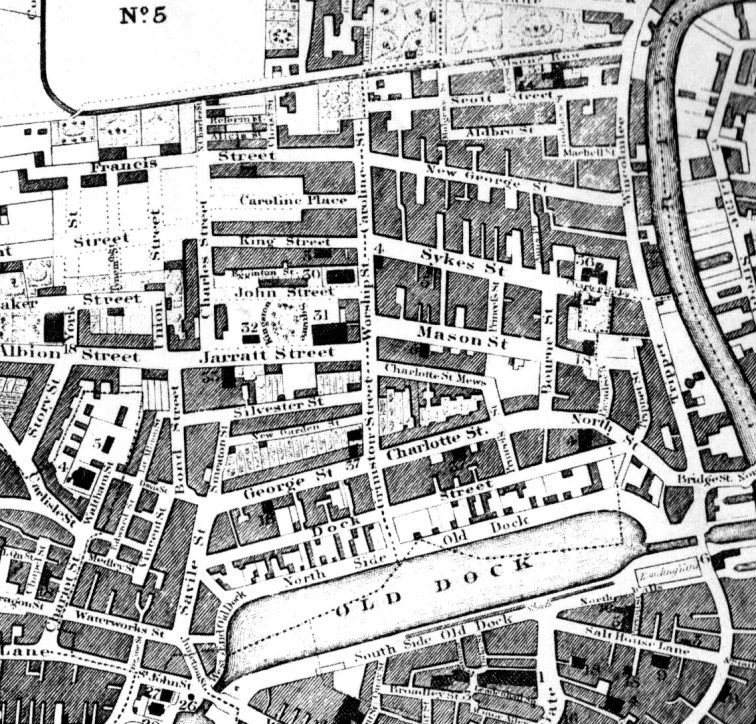
Pierre had bought a large Georgian house on Jarratt Street. It was rather grand but it was still possible to get a lot of house for your money in Hull. They overlooked the side of Hull New Theatre but also had a decent view of Kingston Square and the David Whitfield statue. The children were happy at their good Catholic school. Queen’s Gardens (laid out after the old dock was filled in) were handy and they were very close to the City Centre. The only downside was the building work going on at the Theatre and beyond but that would soon be finished.
There were a few decent pubs within easy walking distance but after some research he settled on the nearest: The Old English Gentleman. It was very much a local being at the back of the New Theatre on Worship Street, mere yards away from Jarratt Street.
The name appealed to him (as a Frenchman as well as a semiotician). Staff and regulars were friendly and it sold interesting and well-kept ales. But what he liked most about it was the décor.
The wood-panelled walls were (almost) covered in signed photos of actors and actresses from days gone by. This was an old-fashioned theatre pub. Stage door Johnnies and Jeanettes could drink here hoping to rub shoulders with the stars. The actors might appear after taking their bow and hand their latest publicity portrait over the bar, nicely signed and dedicated. The landlord was only too willing to frame it and hang it with the others. And here they were still staring down at the drinkers in luminous black and white. Here Variety had never died.
Pierre liked to stand with his pint and study these photographs. He hardly recognised any of them. Gordon Rollings, anyone? Very few were international artistes. Very few were later than 1990. Nothing ages as fast as popular culture. Nothing fades as fast as celebrity. He liked to play a game with himself and connote from their faces as much as he could and check his analysis later on the Net. There were the teasing but demur pin-ups of the starlets; glamour shots of TV actresses, old-time soap stars and female impersonators; cheeky chappie comics; suave matinee idols reduced to playing farces in the provinces and the singers, crooners, tap-dancers and quizmasters of a bygone age. This was, he concluded, sheer showbiz nostalgia for the over-sixties.
On this particular evening (Monday, 5th June) Pierre Brodeur was feeling rather frazzled. Feyderbrand had been particularly demanding and a long day pouring over the schematics still had not revealed a way of shutting down the machine.
Pierre often felt like a pint after a hard day’s theorising and so he pushed open the door of The Old English Gentleman for a quick one before returning to his family for a late dinner. He was greeted as an old friend by Mine Host and ordered a nice pint of Jennings.
As was his custom he looked at a few photographs. (What would Barthes have said about minstrel shows?) Then he sat down in one of the comfiest seats. There were quite a few people in this evening: some regulars and some he’d never seen before. Possibly they were tourists here for some culture. They too were interested in the photographic portraits. He was pleased as he didn’t want this place to close and it couldn’t be easy while the New Theatre was being refurbished. He sipped his pint overlooked by the playbills and photos from yesteryear.
His phone vibrated. He had a new text message. He opened it up to find one word on the screen: Monster. The ridiculous machine had selected a new genre. A trickier genre than Satire, thought M. Brodeur. Feyderbrand wouldn’t be pleased. It was all rather vague. What kind of a monster would some poor person have to face?
He looked around the bar. Nothing had changed but he wouldn’t have expected it to. He was protected by his dream suit. The monster could be anywhere, anywhere at all. Pierre nursed his pint. A constellation of faded stars smiled down on him.
Monster
It is still a matter of conjecture whether the Hull Monster Scare of 2017 began with a whisper or a scream. What is generally agreed is that the first manifestation, in all its ambiguity, was in gallery 9 of the Ferens.
This is in retrospect. Nobody back in March would have been able to recognise this as the start of a chain of events which, for a while, would hold the city in the icy grip of fear.
On that fateful day five school parties were booked in for some work in the Ferens. That wasn’t unusual. Since the refurbished Gallery re-opened there had been increased interest from educational establishments in the area and a constant stream of visitors. The five classes were all different ages and could be accommodated in different rooms. The class from Strive Higher High were twelve years old and deemed old enough to appreciate the exhibition of five of Francis Bacon’s Screaming Popes.
Courtney Lupasco wasn’t so sure. (“Why are they screaming?”) But she put her head on one side and looked as if she was dutifully listening to this bloke talking about them. His droning voice was suddenly interrupted. She heard (and felt) a whisper directly in her right ear. The shock made her scream. The suddenness of her piercing scream startled the girl next to her into a scream of her own. This promptly set off the rest of the class. Some were genuinely scared by the strange turn of events. Some joined in for fun and the sheer novelty of screaming in a space usually reserved for quiet reverence.
The go-to guy for Bacon had never seen a reaction like it. He could only look accusingly at the teacher who was driven to frantic attempts to shush her young charges.
When everything had quietened down Mrs Piper took a sheepish Courtney on one side and asked what had spooked her so. Courtney told her it was a man’s voice right inside her ear. “I could feel his breath, Miss, but there wasn’t a man anywhere near me.”
“And what did this man say to you?”
“Miss,” said Courtney tremulously. “It was like a word but I couldn’t catch it.”
Mrs Piper had no choice but to leave it there. The gallery and the school couldn’t hush it up. The hysteria started up again outside and spread to other school parties taking lunch in Queen Victoria Square. The kids spread the story (with selfies) on their social networks. At this point there was no talk of a monster, only a mystery. Any adult who heard the story dismissed it as a girl creating a scene or performance art or life imitating art.
The second occurrence (according to later attribution) was soon afterwards. This time the whisper had become a murmur and the scream a yelp. One of the narrow lanes of Cottingham, running along the northern edge of Thwaite Hall, was host to a strange wind. A man walking his dog became aware of a sudden gust. The path at that point was hemmed in by high fences on either side. This made the rushing passage of air more noticeable. The man claimed the wind contained wisps of words (“blown along like litter”) but these were instantly lost and he took no meaning from them. The effect on his dog was a very different matter. As he told friends who cared to listen: “Sandy wouldn’t stop barking for a week. We were really worried about him. It’s like something had scared him out of his doggy wits.”
Thwaite is an outlying hall of residence for the University of Hull and it was on their main campus that the next outrage occurred.
This time the assailant (it was becoming more physical) was hidden by weather. Some strange unseasonable mist had rolled in from somewhere. Bordered by Cottingham Road to the south and Inglemire lane to the north the University campus occupies land well away from either the river or the estuary. Despite the nearby street names (Cranbrook, Endike, Inglemire and Newland) this isn’t a particularly boggy or mist-prone area. Nevertheless a very localised and thick fog hung over the Great White Way on this April workday. This north-south axial path links the main entrance to Staff House with paths off to faculty buildings and the Brynmor Jones Library. The tower of the Library dominates the campus and on this day was the only building sticking out above the strange fog. Anyone looking out of an upper story window would have been unable to see what was happening outside at ground level where people were being pushed about. This was no whisper or murmur. Students felt powerful shoves which sent them spinning or falling or barging into other people. But nothing was seen except perhaps shadows moving within the unnatural mist.
All the victims of these assaults were students. A university is not really a mini-city of the young and because no one over 21 were affected this led some people to claim it was another case of mass hysteria. Or a rag day style stunt. Negative stereotypes of students were frequently aired. Some less prejudiced contributors to social media, however, were claiming to see a pattern.
One more incident was needed before the Monster Scare really began to haunt the public imagination. As yet there had been no sighting of anything untoward. But there was an escalation. There always is.
Two anglers were fishing in the Humber west of St Andrew’s Quay. Another strange fog enveloped them, this time clearly coming in off the estuary. One angler was pushed into the water and later claimed to have seen nothing. His friend, however, had seen a vaguely human shape in the fog whose most notable feature were its red glowing eyes.
This prompted interest from the Hull Daily Mail. Never a newspaper to eschew a bit of local sensationalism it went to town. After a trawl through the archives, old stories were retold. The Humber Monster of the 1930s could easily be discounted (as it was a giant squid) but only after filling several columns. The Devil Dog of the Docks was sighted in East Hull in 1934 but had never been seen since. The Beast of Barmston Drain was a possibility but the paper preferred to blame some new horror from the EU which had slipped into the port to spread fear where there should have been celebration.
It ran with the calming headline: HULL MONSTER ON THE LOOSE. A contributor to the letters page pointed out that a monster is always on the loose. A monster not on the loose is called an exhibit.
In The Old English Gentleman Pierre Brodeur had to move seats. A party of young women had come in and were being very noisy. They stood right next to him eyeing his table. They were effusive in their thanks when he gave it up. On their next visit to the bar one of them even bought him a drink.
He had moved to the bench near the door. It only took one poorly maintained seat with a projecting tack and his dream suit was snagged. The molecule thin membrane tore. The dream suit had lost its integrity and with that its ability to protect him from the generic codes and conventions that constituted ‘reality’ for the rest of the pub’s patrons.
He didn’t notice straight away. The genre seeped through the rent in the suit and gradually began to affect the way he interpreted signs.
“There’s something about Hull on the news. Turn it up!” Somebody said loudly enough to be heard over the party of young women. The barmaid reached for the remote and upped the volume as the newsreader was saying:
“…has struck again.” The pub’s lights flickered as if the increased volume was sucking power from the grid.
Now there was a straight-to-camera piece by a woman reporter standing on the Guildhall steps: “And it was here that the Hull Monster, as it has become known, finally showed itself.”
Pierre Brodeur knew then that his protective suit had failed.
The theorist knew the theory: signs denote other signs not an actual reality. Each genre has repeated, predictable signs organised according to convention. So what did he notice now that he was susceptible to the chains of signs creating ‘Monster’?
He saw fear in the faces of the barmaid and her customers as they stared up at the TV news. The drinkers seemed to be standing closer together, taking comfort from each other’s presence. Their drinking had slowed to put off the dreadful moment when they would have to go outside. The women were silent, too, transfixed by the on-screen eye-witness.
“It was scaly, reptilian with the glowing eyes of a serpent,” said a middle-aged man in a business suit. He didn’t look the kind of guy who would make this kind of thing up. He looked scared. He was trying to keep panic out of his voice.
Pierre felt increasingly uneasy himself.
The pub was changing before his very eyes and he grew afraid. The growing anxiety was becoming almost tangible.
He saw the lights in the pub were still flickering. The faces on the pub walls no longer seemed benign self-publicity. Now they seemed to leer and gloat or challenge like the mug shots of child molesters. Their best wishes and signatures were now hieroglyphs, foul imprecations, detailed death curses, hexes.
He could no longer see his reflection in the pub mirror. Monsters have no reflection, he thought, because they were like mirrors themselves, reflecting our fears back to us. They were invisible like the silvered background hiding behind the darkened glass. Then he realised his own thoughts were being twisted by the genre. Did Feyderbrand know how powerful this machine actually was? Had he experimented upon himself? What if the machine was actually the monster and he and the others had unleashed it on the world?
Meanwhile, to his left, something dreadful was happening to Gordon Rollings.
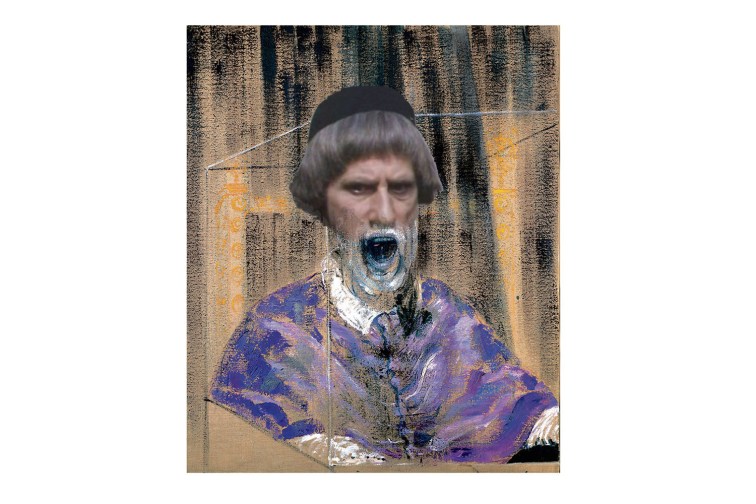
Pierre noticed the rest of the clientele giving him sideways glances before returning to the bulletin.
“People wishing to visit the UK City of Culture are asked to wait until the present emergency is over.” The on-the-spot reporter handed back to the studio with obvious relief. She was free to get in her car and join the queues on the Clive Sullivan Way and get well out of here.
In the pub all eyes were on the Frenchman. Suspicion was on every face. Of course, he thought, he was an outsider and clearly not one of them. The pub was growing hostile. His hand shook as he held his pint. He looked down at it and it, too, had changed. It was scaly. The dream suit, usually invisible had, in its profound and utter failure, become opaque as a flaking, peeling covering.
The suit had doubly failed him: he was stuck in the monster genre and he had become the monster.
Pierre was familiar with the conventions of the genre and knew what happened in the last act. He was right next to the open door. In one swift movement he was on his feet and out onto the street. He started to run. The pub emptied behind him in an exodus of angry shouting men and women. He couldn’t lead the pack to his family. He would head north towards the silo. He wouldn’t be able to go inside – without the suit his brain would be fried that close to the machine – but he might be able to call the team for help. He ran past the History Centre and onto Freetown way. There was still a lot of traffic but he had to get across, dodging cars with their blaring horns.
In his panic he made a mistake. He crossed Sykes Street and plunged through a gate into an estate of council houses and flats. He was soon lost and trapped. Gates had been provided for the security of the residents. Too late he saw every one had a notice warning of limited access. Some gates were locked and he was cornered in the central drying yards.
The mob had followed him in. From somewhere they had acquired burning torches. Their shouts were louder in the confined space:
“String him up!”
“Rip him apart!”
“Ripping him apart is too good for him!”
Dogs barked. The commotion drew residents to their doors. They became caught up in the excitement of the mob and were quickly handed fire brands of their own. The flickering torchlight threw distorted shadows up the walls.
Pierre ducked under a series of clothes lines and jumped a fence. He managed to clamber over a gate and emerged onto a street. The estate continued on the other side but he couldn’t risk another maze.
He had no choice. More people with torches entered the street from both ends trying to cut him off. He had to shoulder charge a locked gate into the rest of the estate.
Again, he had to find his way between houses and garages, over fences and through gates. All the time the growing mob was baying for his blood:
“The monster must die!”
“Burn the witch!”
“Now we have him!”
“Kill, kill, kill!”
“Destroy that which should never be allowed to live!”
Pierre hauled himself over another back gate and, by accident, had escaped the labyrinth. He was running again, passing a pub and up Lockwood Street. He was sure he was heading in the right direction; but how could he call for help when he had to keep running? He was in some industrial streets crammed into a bend of the river. He didn’t know the area well but he knew there were many opportunities for the mob to split up and try and head him off. They were only a few yards behind him. The torchlight was throwing his shadow ahead of him, up the walls of the old factories and warehouses. From somewhere dogs had joined the pack. They were almost – but not quite – snapping at his heels.
“Unwrap the Mummy!”
“Behead the Unbeliever!”
“Death to the undead!”
Brodeur did not need his extensive knowledge of Semiotics to know the signs were not good. He knew now why it was called a dream suit. It had protected him from this nightmare.
Not quite knowing where he was going and with a rising panic Pierre turned the next corner. Momentarily he was out of sight of the mob. He didn’t notice the open door until strong hands grabbed him and hoiked him inside, shutting the door immediately behind him. It was pitch black but he heard the shouting and running feet go past and up the street outside. A female voice whispered: “Shush, you’re safe here.”
After a safe interval a torch came on. More followed until he was being blinded by the light from five head torches.
“Why were they chasing you?” asked a male voice. “We saw you from the roof.”
Pierre was too out of breath to answer immediately. He pointed at his panting face. A wooden chair was brought and he was helped to sit. He faced his interlocutors looking down at him behind their dazzling lights. He shaded his eyes and played for time.
“Please, he managed to get out. “They believe a monster is on the loose and that I’m it.”
“What kind of monster?”
“I don’t know. Does it matter?”
“Not to the people chasing you. They didn’t seem to know either.”
“They sounded like right idiots,” said the female voice again.
“What do I look like to you?” Pierre asked.
“A bloke in a rubber suit,” said a different female voice with a London accent.
“A monster suit?”
There was laughter.
“No, like a frogman.”
“A Frog Man?”
More laughter.
“Like a diver wears, a frogman. You know.”
And Pierre did know. One of the lights moved away from the others, switched off his torch, opened the door and took a careful look-see outside.
“They’ve gone.” He returned to the others and switched on a lamp that was nearby on the floor. The space was illuminated. Pierre was faced by five figures. They were all wearing identical boiler suits, hoods, gas masks and head torches which they were now switching off. Pierre found this hardly reassuring. He was in a shabby disused room divided by a dusty counter bearing the sign: RECEPTION. He was getting the kind of reception not envisaged by the producer of the sign.
The five figures pulled off their respirators and took down their hoods. Five teenagers, he realised: three boys with shaven heads and two girls with Chelsea cuts.
Looking down at himself he saw his dream suit no longer looked like skin. It had darkened further to take on the appearance of a ruined black scuba diving suit, hanging off him in shreds.
Pierre Brodeur laughed in relief. These kids didn’t seem to be affected by the genre, or certainly not in the same way as the mob.
“Who are you people? Why were you on the roof?”
“We’re urbexers,” said one of the boys.
“Huh?”
“Urban explorers, mate. We get in, we tag it, we get out.”
“Tag it?”
“Yeah, we’re graffiti artists, cultural guerrillas. We’re the Hull Skins. You must have seen our work.”
“You’ve said too much,” said the blonde girl.
“Are you kidding? We saved this guy from a lynching.”
“Yes, you needn’t worry about me.”
The Hull Skins. Maybe that’s the explanation, thought Pierre. A monster is the ultimate outsider. These skinheads were outsiders too. They wouldn’t share the same ideologies as the pack.
“So, you haven’t caught the news this evening?” he asked.
“No, mate, never bother with it. It’s all fake news these days anyway, isn’t it?”
“Yes, I’m afraid it is.”
Only 15 minutes after Pierre’s call for help and Charles Renard was standing in the room taking charge of the situation. His boss was sitting on a rickety chair with five skinheads in boiler suits standing over him. He waved them aside and gestured for Pierre to stand. He opened his briefcase. In the silence of the room the clicks were very loud. He took out the dream suit applicator which was disguised as an ordinary spray can.
Pierre pulled off the shreds of the dead suit and began to strip. The teenagers turned their backs. Some taboos are difficult to shake even for outsiders, he thought, as Renard sprayed him from head to toe. He didn’t forget the soles of his feet, his wide-open eyes and every orifice. Pierre pulled on his clothes over the replacement dream suit. He coughed and the gang turned to face him.
“I cannot thank you enough. You have saved my life. I owe you. What are your names?”
Rather reluctantly his saviours introduced themselves. Pierre thanked them again and he and Charles Renard took their leave. They made their way through deserted streets to the silo.
In the safety of the Institut, Feyderbrand, Demi Leather and Renard thoroughly debriefed Pierre. After his theorist had recited the names of the Skins Feyderbrand held up his hand.
“Sasha Spence? Now where have I heard that name before?”
“Yes,” said Pierre. “I was rescued by Illusory Girl.”
“What can that possibly mean?”
Demi Leather had done her own research into the anime series. She said:
“She can be whatever she makes us think we want her to be.”
 pig productions
Have just finished the novel The Essex Serpent which has similarities to the hysteria caused by unexplained phenomena. The chase by the mob in this story has great pace and keeps the tension going. Another excellent instalment and good to be back in Hull.
LikeLiked by 1 person
Just catching up after inexcusable lapse. Another fine pacy episode with shades of Stephen King with the mist. lovely quote about celebrity.
LikeLiked by 1 person