Ghost Story
Towards the end of the last century on a date in July a reasonably good-looking middle aged man stepped out of a public house to look about him.
The light was fading fast. It was twilight and despite the summer month a gentle breeze was wafting tendrils of fog from the river and over the neighbouring streets. There was no traffic and the area was silent and deserted except for this solitary figure.
Clasping his retrieved glasses case in one hand Gary paused outside the Bay Horse to pop a stick of gum in his mouth. It wouldn’t take him long to catch up with the others; they’d only be two sips into their pints, three at the most, but he didn’t want to give them any longer to gossip about him behind his back. He quickened his pace.
He had no need to visit the bridge or take to the Flags so he stuck to the Bay Horse side of Wincolmlee on his route to the Whalebone. He crossed Scott Street and continued under Maizecor’s tower and footbridge. The road here dipped, in the past it had been known to flood, and tonight the fog had gathered and thickened here. His footsteps echoed in the otherwise silent gloom. On his left was a little used footpath leading to Charles Street. It looked distinctly uninviting in the failing light.
After passing more industrial-type premises he reached the mini-roundabout and junction where Green Lane and Lincoln Street met Wincolmlee. Here too Barmston Drain went under the road before flowing into the River Hull. Now he could hear rushing water. The Whalebone was only yards away.
He looked about him for traffic and was about to cross the junction when he felt a child’s hand in his. Surprised, he looked down. Holding his left hand was a little boy. Gary couldn’t see what he looked like because he was wearing a school cap and the peak hid his face. In the dusk he could just make out a blazer and short trousers and sensible shoes.
Now Gary knew better than to hold hands with strange youngsters in the street (this was 1996 after all) and he tried to break free but the little boy’s grip was surprisingly strong.
Without looking up the boy piped in a strange treble: “Help me, mister.”
“Shouldn’t you be in bed?” asked Gary and immediately regretted his choice of words. “Which way are you going?” he said to cover his embarrassment.
He was looking down at the child who now looked up. As the dying light caught his face Gary saw the schoolboy had no eyes. In their place were glass marbles that glowed from within.
In shock Gary swallowed his gum. The child spoke again in a sing-song voice: “Chew, chew, chewing gum. That’s what brought me to my grave.”
Gary and his new friend never made it to the other side of the road. The earth opened and swallowed them up. These were indeed the shifting sands of reality.
As for the supernatural forces at work there will always be other foolish persons who swallow their gum and let it wrap around their beating hearts until these too are stilled.
Clutching a trophy of his victim the ghost of little Alfie Middleton sped back to his cemetery.
For Gary there was no grave. He would be forever forced to share the cold damp clay under Wincolmlee with the ghosts of long-dead whales.
He was always lost without his glasses.
???
“Signs,” I tell my card-playing compatriots (we Germans tend to stick together in this largely French outfit), “What are they all about? The other day I saw a sign on a road. It said ‘missing cats eyes.’ I know this country’s in a mess, but really.”
It is my turn to drop a card so I am effectively putting the game on hold. I continue:
“I was down the Land of Green Ginger the other day. Now, that’s a street sign that promises a lot more than it delivers. Hardly anything to it. OK, there’s England’s smallest window. Give me a break. That’s like a window for people who don’t understand the point of windows. You wouldn’t know it was there if they hadn’t put a sign up.”
That gets a weak smile from my friend Dieter. Like most areas in the silo the recreation room has no windows.
“Oh, I see,” Dieter says. “You’re putting together a ‘bit’ for an open microphone night and first trying it out on us?”
Dieter says ‘microphone’ like ‘mike-ro-phone,’ like it’s just been invented. He was my look-out man when I switched the machine to ‘Pirate.’ He got away scot-free.
“Open Mike night,” I correct him. I pride myself on my grasp of English idioms. “Here’s one especially for you guys: did Feyderbrand lose the plot or did the plot lose Feyderbrand?”
“You forgot the ‘I say, I say, I say’ that the Englanders use to precede a joke of that weakness.” This from Gerwine. She is head of Housekeeping but doesn’t fit the usual stereotype of housekeeper (mumsy, brisk, starched) but she efficiently takes care of our disparate bunch of genre-benders. She adds: “You really ought to be on the stage. It leaves in ten minutes.” She mimes hitting cymbals. I think Gerwine is even more conversant with this strange otherworldly culture than I am.
Reinhart shakes his head. “We’ve been in this country far too long.”
“But what I don’t get is…”
“For God’s sake play a card,” Reinhart growls and I play a card. It wasn’t a black three but should be safe enough. Gerwine picks the pack. I know there’s a pure canasta of humble fives in there. My partner, Dieter, gives me an accusatory look over the baize. I mouth ‘sorry’ at him. Reinhart grins. He thinks he panicked me into a stupid play.
I hear my name. Sylvie is in the rec. room doorway. She is a technician in a white coat. (Although there’s not much technicianing going on these days.)
“Heinz,” she repeats. “You’re wanted on the top floor.” She grins, everyone in the Extractor knows my (shall we say) problems with the high-ups. “Better look sharp!”
I favour my fellow card-players with a rueful smile and an exaggerated shrug before throwing down my hand in such a manner as to suggest I was going to come back strong after my poor discard. I quit the rec. room and I am in the interior space of the silo. The machine towers above me. We’re out of ‘Fantasy’ but no one is bothering to tell underlings like me what new genre has been selected. The galleries and gantries around it are peopled with more white coats trying to look busy. I make my way to the elevator. Brodeur has installed himself (with unseemly haste) in Feyderbrand’s old office.
Since Feyderbrand ‘took one for the team’ as the euphemism has it, Brodeur has been our boss. I would have preferred Demi but the majority voted for Brodeur. I suppose they figure he was the first to spot the near-fatal indecisiveness at the top.
I liked Feyderbrand. He bawled me out over ‘Pirate’ but had forgotten about it (at least my part in it) by the next day. Brodeur, on the other hand, bears grudges. For him I’ll always be the class clown and I find myself playing the part.
The lift doors open with a hiss and I step out onto the top floor gallery. The roof has been patched up. The Extractor (I refuse to call it the Institut; what’s that all about?) was easily repaired. We have lost the silo’s distinctive blue water tank which crashed next door but the rest of the structure is sound.
I knock on Brodeur’s door and get a curt “come in.” I arrange my features to suggest eagerness to please combined with continuing enthusiasm for a project which only the short-sighted would write off as hopeless. Only then do I open the door.
And there is Brodeur behind his master’s desk. The photo of the fake family is gone. It never fooled anyone.
“Hasenkamp,” says Brodeur. He makes my name rhyme with Mein Kampf as if I am his struggle, the cross he is forced to bear. Demi is also in the room, sitting, smiling. She waves me to a chair.
“Heinz, my dear boy.”
Demi likes to emphasise my youth like this. It does two things: it is a pre-emptive excuse for any folly I might perpetrate and it puts a distance between us.
She is dressed in a sensible linen suit. She looks no-nonsense (she didn’t take any of my nonsense at the Christmas party) and I am smart but casual. We were all able to smarten up once the deliveries restarted. Brodeur is in a suit and tie. He has the look of a man who was responsible for his boss falling off a roof. He is wearing dead man’s shoes. He scowls.
“We have a job for you, Hasenkamp, out there.” His scowl morphs into a smile. I am uneasy. Is this how he suckered Feyderbrand?
I suppose out there shouldn’t be too dangerous. ‘Fantasy’ is over (but what is the new choice?) and Renard’s lockdown has been partly eased.
Out there Feyderbrand’s death is now judged to be an accident, his fancy dress a quaint eccentricity. His body was found amongst the smashed water tank and more brick debris in the builder’s yard. Luckily for the project government cutbacks had rendered health and safety snoopers impotent and no investigation will be mounted.
What had killed him? Within the Extractor speculation is rife. We’d all watched the fight on the roof through the machine’s monitors. We’d all seen the lightning bolt but the meaning of the sign divided opinion. I am one of those who put it down to sheer bad luck: a perfectly natural concomitant of a thunderstorm and probably attracted to the roof by the metal tank or two swashbucklers waving their swords about.
Many of the semioticians have put it down to the genre. In ‘Fantasy’ a lightning bolt is a magical weapon. There is even a whisper going the rounds that it was a just punishment for a man who had pursued the forbidden knowledge of genre manipulation. He had brought down upon his head the wrath of God. It was a warning to us all. Feyderbrand would have hated that. He would have said that was just the sort of mythology he wanted to render redundant.
Pierre Brodeur leans forward across the massive desk. “As our resident expert on genre…” His smile widens. He is a funny guy (funny guy) and I smile back pleasantly. “…You are an ideal man for this task. In fact you were the first person Demi and I thought of.” I am so first person but I know this is how they suckered Feyderbrand. “You see the machine has suffered a further malfunction.” Demi shakes her head sadly. “We no longer know what genre it has selected. We know it briefly chose ‘Ghost Story’ after ‘Fantasy’ but then the display went blank.”
“Just static,” chips in Demi.
“Exactly so, static,” continues Brodeur. “So, we want you to go out there minus dream suit protection and find out what’s going on.”
“Ah,” I say. “You want me to, like, scout around and play ‘spot the genre’?”
“Precisely. We could still be in ‘Ghost Story’ but we don’t know. Our monitors are next to useless at any range. We need to know the genre to prevent more difficulties like those of ‘Fantasy’. We do know that if the selection is still ‘Ghost Story’ then the ghost can’t be in here as we’re still outside of genre. There is no ‘Ghost in the Machine’ for us.”
“But for me?”
“If you see some spook with its head under its arm going ‘whoo, whoo, whoo’ you’ll let us know. Who you gonna call?”
“Very good, sir, you.”
“Yes, me. Me.”
And so I leave the Extractor the very same afternoon. The doors shut behind me but I don’t hear bolts slamming shut. The lockdown has eased. I have my instructions but they are vague: walk around Hull. I pick my way through the builder’s yard that serves as our front and out onto Foster Street. With regret I walk past the Wilmington Café and stroll along this busy industrial road towards Stoneferry Road and Cleveland Street. I pause only to bend over to tie my shoelace and surreptitiously use a pin to prick the dream suit (and through it into my shin).
I cross the road to take a bus to town. I must be in genre by now although my dream suit has shown no sign of change and has remained invisible. So far everything (people, traffic, environment) looks like the Hull I know. The crinoline count is zero and I dismiss ‘period drama’ or at least that Victorian and Georgian stuff the Brits love so much. Likewise I swiftly eliminate ‘Biblical Epic’ or ‘Sword ‘n’ Sandal’.
I would love to be able to rule out ‘Science Fiction’ at this stage but I can’t. This could be another dimension or an alternate reality. I could be an unwilling guest in a Hull theme park on another planet. These people around me could be robots here for my entertainment. Genre convention decrees they will go wrong and run amok. Their heads will rotate as they scream ‘give us a skeg, give us a skeg’ in high-pitched voices.
A bus comes and I put out my hand. The bus stops. I get on and pay the driver the fare. I take a ticket and find a seat downstairs. I go near the back of the bus as I know I must not take one of the seats designated for people in special circumstances. I look around. My fellow passengers look disinterested and not about to break into song. Hopefully I can rule out ‘Musical’. We’re not all going on a summer holiday.
The bus sets off. Unexpectedly it turns left down Mount Pleasant (neither a mount nor pleasant). A woman walks up to the front. She passes the sign saying ‘do not talk to the driver’ in order to talk to the driver.
“I thought this bus was going to the Interchange?”
“No, love,” he says. “Holderness Road then Longhill.”
“But the sign on the front says ‘Hull Interchange’.”
“It says ‘India’ on the tyres but we’re not going there either.”
It sounds polished, worked up in the busman’s canteen. Everyone’s got their ‘bit’ and I must remember this one.
The woman sits back down. She is going to the wrong destination with a smile on her face. Is this a metaphor?
The bus takes me along Holderness Road. I see shuttered up shops, charity shops, ex-catalogue shops, betting shops. There has been regeneration in this city but it hasn’t reached here. I get off the bus at East Park, cross the road and get a bus back to town.
At the end of Witham, by North Bridge, I see a billboard. An ad agency has rented this space and put up a large poster to extol the virtues of a brand of fried chicken. There is a large colourful drawing of a chicken. It is smiling. This is despite (a) the famous inflexibility of beaks and (b) the chicken’s inevitable fate. The caption refers to ‘dirty chicken’. This poses more questions than it answers and I smile back at it.
Involuntarily I think back to the day I was recruited. It was a week after I’d sent off my submission to the Deutsche Gesellschaft für Semiotik for their annual prize (a piece on genre codes) and this woman approached me in the street outside my house. She introduced herself as Madame Leather. Naturally I was intrigued. She told me the organisation she represented (the Institut Baudrillard) was very interested in my work and could offer me a position which would be far more remunerative than the DGS prize. There were, she promised, strange and wonderful opportunities for a young semiotician like me in what she called the ‘world of genre transformation’. Where else was I going to get an offer like that?
I get off the bus and walk into Old Town. So far I have been unable to pinpoint any genre. Everything appears to be genre-free but I know this cannot be. I am simply in a genre without a fixed iconography I could be in ‘Kitchen Sink Drama’ but wouldn’t know it out here pounding the streets. Maybe we are in ‘Mystery’ again.
I see a placard advertising an early edition of the local newspaper. The headline reads: DNA Match Baffles Boffins. I enter the newsagents and buy a copy. I sit on a public bench on Whitefriargate and read the story. Two days ago a woman’s body had been fished out of the River Hull. (I knew that, this is hardly news.) She is still unidentified (unusual in this day and age) but now some DNA found on her corpse linked her to the previously unsolved murder of a man found out at Springhead.
Is this the key signifier of the current genre? Are we in ‘Newsroom Drama’ (“hold the front page”), ‘Detective’ or ‘Whodunnit’? Have we reverted back to ‘Police Procedural’?
The rest of the paper offers no clues and little news (a chip pan fire on Greatfield) and I leave the paper on the bench and walk on.
I enter Hepworth’s Arcade. I am drawn to the window of Dinsdale’s joke shop. This is my kind of shop. So-called ‘practical’ jokes are displayed on a board for my perusal. There is ‘Dirty Face Soap’. What the hell is that all about? (No, really, what is that all about? I want answers here.) They have stink bombs, rubber vomit, itching powder and whoopee cushions.
A man comes out, a complete stranger, and he says to me, he says: “Here, mate, you want to stick your head in here.” I nod. I cannot resist and I enter the dark shop. A man is behind the counter. He could be wearing a joke-glasses-and-false-nose-and-goofy-teeth set but he isn’t. I ask for itching powder.
“How strong?” he asks.
“Medium?” I hazard.
“Non hospitalisation, very wise,” he says. “Although it is completely untraceable, back to me at least.” He smiles as he pushes the packet towards me.
This is one of those Hull moments: is he being funny? I decide he is. “Good one,” I say and pay.
Can I use this in my ‘bit’? It’s a joke about a joke but aren’t we all post-modern meta-comedians now?
Well, aren’t we?
I am on the pier. There is a blue sky and a slight breeze. There are dead flowers and padlocks fastened to the railings on the pier. Metal fish are set in the wooden planking. I am on the Fish Trail. I can see Salt End, the Ferry, Siemens and the Deep. I can look over the estuary at Lincolnshire, famous for its sausages and potatoes, a county of bangers and mash.
I walk back to the city centre by way of the café in Humber Street Gallery. I drink coffee and contemplate Dead Bod.
I cross a big horrid road into Market Place. Under the golden statue of King William III (“The Great Deliverer”) there is a closed Gents. I am told the cisterns were glass and had fish in them. That I would like to see.
I walk on and turn into Bishop Lane. I realise my error immediately. Walking towards me down this narrow cobbled street is a skinhead gang. There must be a dozen of them. They all have cropped hair and big boots. Despite the warm weather some of the girls are wearing sheepskin coats. Two boys are in Donkey Jackets. Maybe I am in ‘Period Drama’ after all. I should turn around and stroll nonchalantly back towards the main thoroughfare but I have my pride and carry on. I have to press up against a doorway to let them pass but they are only interested in each other and do not even look my way. Are these the kids who rescued Brodeur? Or are there loads of them in Hull? Is ‘Skinhead’ a genre? ‘Teenage Delinquent Gang’ (with built-in moral panic) certainly is. Anyway, I manage to reach historic High Street without aggro.
I see a sign. Under the firm’s name it says: ‘Evidence-based solutions’. I walk on with a smile on my face. My ‘bit’ for the Open Mike night is writing itself. And immediately I get it. I know what I am going to tell Brodeur and Demi. I’ve worked it out.
Freshly dream-suited and back in the Extractor I am whistling as I ride the elevator to the top floor. They are going to be so pleased with me. In one day I’m going to go from class clown to top of the form. I give a confident knock on Brodeur’s door. “Come on in,” he says and I follow his instructions to the letter. He is behind his desk and Demi is in the same chair as if no time has passed. This time no one bids me to be seated. Demi looks serious.
“Well, Heinz,” she says. “What genre has the machine selected?”
I look smug. “Observational Comedy,” I answer. “It was revealing itself all day but it took me a while to… What?” They are both grinning at me now. “You knew!”
“That is so. There was nothing wrong with the machine’s display.”
“Then…?”
“It was a test, that’s all.”
“Which you passed.” This is praise indeed from Brodeur.
“As we knew you would, being a comedian.”
Brodeur stands and walks around to my side of the desk. He puts his arm around my shoulders. He says: “You’ve shown us that you’re just the man for a small task we have in mind.” Demi stands too. She speaks softly and I have to strain to catch what she says:
“We have a plan.”
Three Act Revenge Tragedy
Act I
Every seaport can boast houses that offer hospitality (of various sorts) to sailors. In Boston in 1721 most of them were in or around Ann Street. This was the preferred destination for most seamen on shore leave who might be intent on carnal pleasure.
Among the brothels, snoozing kens, molly-houses and jilt shops was one house where frolicking was not always order of the day. It welcomed not only sailors but soldiers, blacksmiths, artisans, indeed anyone who made their way in the world dressed in men’s apparel but who had been born female. Physical liaisons did take place here (in the upstairs chambers) but it more closely resembled a meeting place, an exclusive and very secret club. This was a safe haven where certain pretences could be dropped and experiences shared.
Needless to say the services of this house could not be advertised like others in the street and its nature had to remain a closely guarded secret. Its continued existence relied on the discretion of its guests. As far as any observer could tell: men went in and men went out.
On an autumn evening in this year of 1721 one such observer was stationed outside this house on Ann Street. He was waiting for one particular visitor and he was intent on vengeance.
The revenger, a man in man’s clothing, was privy to the secret of the house. He had spent days making enquiries along the wharves of Boston and, as his old Cap’n used to say, there is no port free of gossip. Eventually someone had blabbed. He needed this intelligence for he had long been aware of the nature of his intended victim. He had begun a lonely stakeout of the house on Ann Street.
The watcher in the shadows was so certain of his stratagem that he felt no great thrill or exhilaration when his target did turn up at twilight, one evening in October. He merely stepped back into deeper shadow to watch his mark give the coded knock needed for admittance.
He did not mind the three hour wait. He had waited years for this and three hours seemed a mere moment in the scheme of things. Occasionally his finger would test the keenness of the blade be held behind his back.
When the target left the house on Ann Street it was clear that drink had been taken. The revenger grinned as he left his post to follow the swaying drunk. This was going to be easy. He knew the route his victim would take back to the ship and it ran close to his temporary base. He followed his mark to this point and put his arm around him. He pretended to befriend the befuddled sailor who he guided gently but firmly into the tent.
Here, by the light of an oil lamp, the agent of vengeance completed the first part of his devilish plot. The killing was the easy part. The post-mortem work took all the knife and stitching skills that he had acquired in his old occupation below decks. He surveyed his grisly handiwork. This act had not quenched his thirst for vengeance. Maybe the next one would give him more satisfaction. Certainly the one after that…
Act II
Who can resist a freak show? Certainly not a ship’s surgeon who was a keen student of natural philosophy who prided himself on his curiosity.
He had first noticed the tent when taking a turn on the deck. It had been erected overnight on some waste ground behind Pools Wharfe. A garish sign hung above the entrance. He borrowed a spyglass to read it: A World of Wonders.
Taking his leave of the ship was delayed because of the uncharacteristic failure of the First Mate to report back but at one bell in the afternoon he strolled down the gangplank to the quayside. He had to walk through a down-at-heel district of the port and kept his lavender-scented handkerchief pressed to his nose. When he reached the tent he looked about him but there was no one about. He lifted the flap and went inside.
A man was sitting behind a simple trestle. It was dark and the doctor couldn’t make him out very well. He could see a bushy sea-dog beard and long hair coming out from behind a bandana. There might have been the glint of earrings. He was eating which explained why he hadn’t been outside drumming up custom with wild claims.
“Aaar,” the man said in a strong Cornish accent. “You be mighty interested in the vagaries of what the natural world has to offer, sir?”
“Always,” said the ship’s surgeon. “How much?”
The Cornishman named his price and the doctor paid it. As soon as the coins clinked into the leather bag the proprietor of the World of Wonders pushed aside his meal. He wiped crumbs from his mouth and beard and picked up an ivory pointer. He stood and pulled aside another tent flap.
“This be the way, sir. Ye’ll be gettin’ a private tour.”
“Thank you,” said the ship’s surgeon following him into the exhibition area of the tent where another oil lamp feebly lit a range of artefacts and taxidermy. One part of the tent was curtained off.
“First, sir, may I point out to ye this wonder of nature. This, sir, is a snake. It be coiled, as ye see, and it be made of rock. Ye can touch this exhibit, sir, and feel its heft. Was it one of the serpents turned to rock by the blessed Saint Hilda?”
“And brought here to the colonies?” The doctor noticed the head of the snake had been carved into the rock but the rest looked natural.
“It was from a Whitby man I bought it, indeed. And here, another marvel sir, a two-headed pig. Uncanny, wherever you be in the tent its eyes seem to be following you?
“Our next exhibit, sir, be a creature from your nightmares. But it was actually caught, sir, in the Appalachians west of here. A spider-sheep, sir. Look upon it.”
The ship’s doctor looked. The eight-legged sheep appeared to be in the early stages of decomposition. He could see extra eyes, made of glass, had been inserted into the face.
“Astonishing,” he said. His guide nodded in agreement to the plain truth of this assessment.
More malformed farm animals with lurid titles were pointed out to him before he was led before the curtain.
“Now, good sir, the highlight of our exhibition. You will have heard tales of these fabled creatures…” The showman twitched aside the curtain. “…But this is the only one ever to be shown in an exhibition dedicated to natural philosophy. A true wonder of the world.”
Before the physician was a mermaid. If this is a waxwork, he thought, it was very good indeed. The head, arms and torso looked human. The bottom half was fish-like, an impressive tail covered in scales.
“Look closer, sir, to satisfy yourself.” His guide took the oil lamp from the middle of the tent and brought it nearer to the creature. The doctor peered at it. He could see it wasn’t wax and he saw where the human and the fish had been sewn together. He could hardly believe that this had been done to a person after death. They had been robbed of all dignity to feature in this tawdry exhibition. It was an abomination.
He stared at the head. It was a woman’s head and the lips had been rouged. It had long black hair which looked like a wig. Seaweed had been threaded through it. There was something familiar about the face. He leaned in and the lamp was brought closer too and recognition came.
“That’s…” and he could say no more because a knife was at his throat.
“Your First Mate, aye, and transformed under the knife. The knife you showed me how to wield.”
The Cornish accent had disappeared. The showman stood in front of him still holding the oil lamp aloft in one hand and the knife in the other, its point pricking the skin of his throat.
“And do you remember another of your old crewmates from the good ship Silver Wake?”
“William? William, my old loblolly boy!” It was hard for the doctor to speak with the knife pressing into his flesh. Nevertheless he added, rather foolishly: “You’ve grown a beard!”
“More than the First Mate could ever manage, eh? But then it’s had plenty of time to grow. I’ll tell you about it but first…” First he made sure the doctor was securely bound and gagged. Then he went off to close the exhibition and prevent any interruptions. The ship’s surgeon was left to contemplate the mutilated body of his friend.
The loblolly boy returned and sat before him cross-legged on the ground. He had a pipe which he filled with leaf before commencing his story.
“I was alone on that island for five long years. Not quite alone, perhaps, for many a time I was visited by the ghosts of the crew of that French ship and they were a-chattering around me. Whether they were truly there or no I took some little comfort from their company. There was one common thread to their discourse: I was to take vengeance on the pirates who had sunk their ship and rescued so few of their crew. The same pirates who had so cruelly marooned me.
“There was fresh water on the isle and strange fruit and berries and tubers. There were no animals but I made nets from hemp and caught fish and birds. It could have been much worse, I daresay.
“I built a beacon on the highest hill and kept watch as often as I could and one day I saw a ship and lit my fire. They sent a cutter for me and I was rescued. They were colonists and kind to me finally setting me ashore in Virginia. There I began my search for the Silver Wake. There were tales of Cap’n and his infamous deeds but no sightings.
“But, and this will astound you doctor, even in this World of Wonders, in Lancaster I came across the men I was supposed to meet in the Black Tongue all those years ago. I didn’t know them – I only knew the meeting place as you had read it to me from that accursed map – but they knew me from when the Cap’n removed me so forcefully.
“There were three of them and were now calling themselves a Right Worshipful Companie, trying to raise capital to pursue the Frenchman’s hoard. They had three parts of that old rogue’s map and just needed the forth. I was glad to help them for I could draw most of the plan from memory.
“You may be wondering, doctor, why I didn’t join their Companie for a share in the treasure? Well, they could keep their gold or whatever the map would lead them to. I want vengeance. Then the voices will be silent and I will be free. I gave them an idea for an emblem for their Companie and left them.
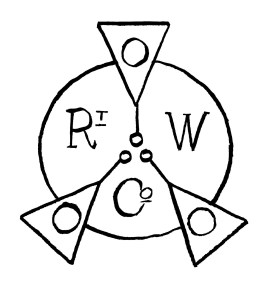
“I travelled here to Boston. I knew eventually Cap’n would put in here and I waited. Through my knowledge of secrets poorly kept,” he gestured towards the First Mate. “My schemes are coming to fruition. I knew you couldn’t resist a lure like this. Now, doctor, you must pay a price for your a-blabbin’ to that dread Cap’n.”
With his knife the loblolly boy put an end to his old master, the surgeon of the Silver Wake. After a few surgical flourishes of his own the revenger wiped his knife clean on the flap of the tent and emerged into the sunlight of a Boston afternoon.
Two down and one to go and then his voices would be satisfied. The World of Wonders was no longer of any use. Cap’n was one man who could resist a freak show. He didn’t like animals however many heads they had and superfluous limbs were a personal affront. A different lure would be needed and the revenger knew just the thing…
Act III
The following advertisement appeared in two editions of the Boston Gazette:
Tired of the traditional peg leg? Finding your hook charmingly intimidating but allowing only limited dexterity? Eye patch too unfashionably piratical? We have an entirely new range of artificial limbs and glass eyes. Imported directly from London, Paris and Amsterdam with all the latest innovations. We stock the Verduyn non-locking below-knee artificial legs. We have a wide range of self-adjustable spring-loaded hands complete with quick-release mechanisms. Our glass eyes can be perfectly matched to your own. If we haven’t got your eye colour we will manufacture one bespoke.
Fairbright Bros. Suppliers of strap-ons to the Aristocracy.
Find us at 32, Union Street, Boston.
No appointment necessary.
You will be amazed at our attention and service.
Alternatively, our representative can be found at the sign of the Red Lion every afternoon. He will arrange a shipboard consultation for those desiring the utmost discretion.
A few days after the second appearance of the advertisement William is to be found in Cap’n’s cabin. He hasn’t stood here for six hard, long years and he knows his thirst for vengeance will soon be sated. His samples of artificial limbs and his case of glass eyes are laid out on the chart table. A crewman frisks him for concealed weapons and pronounces him ‘clean’. Cap’n waves the sailor from the cabin. He looks stouter, William thinks, he’s been eating well while the marooned man has been netting sparrows.
“Can’t be too careful,” Cap’n growls. “We’ve been losing crew ashore recently. Never mind that, let’s see what you’ve got.”
William notes that Cap’n makes no reference to the grisly condition of the two corpses discovered in the abandoned freak show even though it was the talk of the town. He guesses the ship’s complement has been further depleted through desertion.
Cap’n inspects the samples laid out for him while William points out key features and rattles off some sales talk he’d learnt from a genuine Fairbright Bros. Representative.
At the last leg William and Cap’n are standing side by side. Just as the revenger feels his moment has come the Cap’n says: “How did you know to bring only left legs and hands?”
William swallows hard. “The men you sent to the inn told me.”
“No they didn’t. Cap’n’s orders.” Quick as a flash and Cap’n has his hook around William’s belt and pulls him close until they are face to face. “Let’s have a proper look at you.”
William panics. He makes for the nearest leg to release the dagger that was concealed within but Cap’n is too quick for him and uses his hook to pull William away from the table.
“You should know, William, that you don’t get to be Cap’n of a pirate ship without a healthy dose of suspicion. Your lure, me old shipmate, was just a little bit too pat.”
Cap’n has his cutlass in his real hand and it is pointed right at the heart of his would-be assassin. He releases the thwarted revenger from his hook. He takes a step back and runs him through with the finesse born of much practice. William’s voices cease their clamour and are silent for evermore.
 pig productions
It doesn’t look like there’s going to be a happy ever after ending to this. It’s a like a big jam doughnut.
It’s arrival gives you pleasure whilst it’s departure leaves you asking for more.
LikeLiked by 1 person
Just catching up (again!) . Well done for weaving Dinsdales into the story! It feels like you are taking the readers on a continuous tour of Hull genre by genre.
LikeLiked by 1 person